Module
Machine Learning
Introduction
My e‑portfolio tells the story of my journey through my latest module, Machine Learning. Every unit is broken down with Gibbs’ Reflective Cycle (The University of Edinburgh, 2024), and I finish with a big‑picture reflection that also borrows the “What? So what? Now what?” steps from Rolfe et al. (2001). Walland & Shaw (2020) go on and tell us that an e‑portfolio is both process and product, so you’ll see my messy thinking as well as my polished results.
Reflection Approach: Gibbs’ Reflective Cycle
Why Gibbs’ Reflective Cycle? Because it is well rounded and has successfully helped me through several modules now. The cycle involves six key steps:
Gibbs’ Reflective Cycle keeps me honest: I describe, feel, evaluate, analyse, conclude, action‑plan – no corners cut throughout each unit.
Reflection on Each Unit
Unit 1 – Introduction to Machine Learning
Unit 2 – Exploratory Data Analysis
Unit 3 – Correlation & Regression
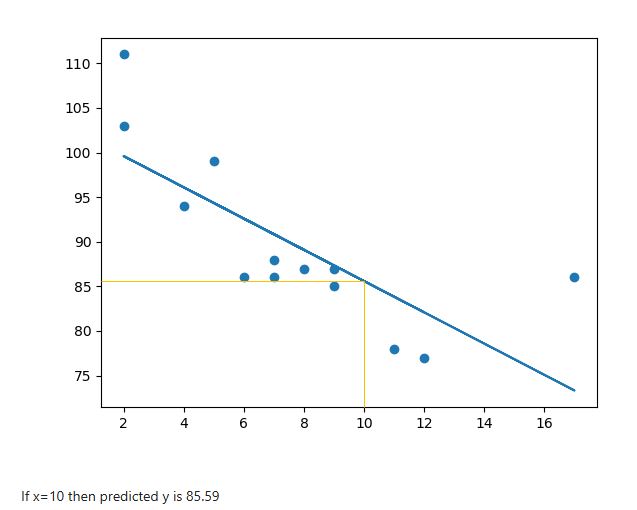
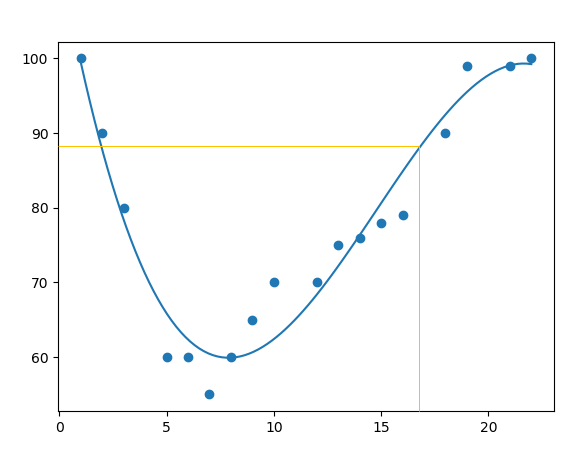
Unit 4 – Linear Regression with Scikit‑Learn
Unit 5 – Clustering
Unit 6 – Clustering with Python (Team Project)
Unit 7 – Intro to Artificial Neural Networks (ANN)
Unit 8 – Training an ANN
Unit 9 – Intro to CNNs
Unit 10 – Natural Language Processing
Unit 11 – Model Selection & Evaluation (Presentation)
Unit 12 – Industry 4.0 & ML
Reflection Piece
What? Summary of journey
Twelve units later and I have taken another step in my algorithm skills, but just as importantly, I have seen where I still need to learn. The module felt familiar, as I have several years of experience in Machine Learning. Though the module brought new ideas to the table that I have not dived deep enough into throughout my career.
I am proud of what I delivered. From investigating and reporting on a famous IT outage to building my first practical CNN project for a company I work for. I have learnt a lot this module. Each module introduced me to insights into neural networks I had yet to discover. Though I do need to dive deeper into large language models (LLM) and transformers myself. I have more confidence with machine learning than before, and now I know the importance of taking ethics and communication into account.
As Walland & Shaw (2020) insist, an e‑portfolio is about the process behind the artefacts. So, the real story sits in the invisible layers: late‑night debugging, bad ping, “A‑ha!” moments when domain context finally clicks, and that performance anxiety during live presentations.
So what? Digging into growth, pain points, and patterns
| Theme | Wins | Learning Opportunity | Evidence / Trigger |
|---|---|---|---|
| Technical depth | CNN accuracy > 80 %; wrote clean modular code. No issues with code throughout module | Limited exposure to LLMs and transformers | Unit 9 notebook and unit 11 project show programming skill |
| Ethical & resilience lens | Started “red‑team” mindset; added fall‑back design to dashboards | Missed the unit 8 collaboration discussion | Unit 11 project shows growth in ethical lens and red-team mindset |
| Communication / storytelling | Reports clearer than last module. | Saw how far I still have to go when I had to present the slideshow to executives not familiar with machine learning | Feedback from unit 1 collaboration discussion. Unit 6 team project feedback from team when handing over ideas and notebook |
| Collaboration | Smooth and enjoyable pairing with team during unit 6 team project | Due to work commitments, I had the voluntary option to assist with the reporting side of the project after completing the coding side. I was unable to make it due to time constraints. | Team feedback and all following each other on LinkedIn. |
| Time‑management | The team and i finished unit 6 by the end of unit 5. Ahead of schedule early doors | Work crisis caused university to take a back foot for a few weeks. Had to pull late nights to catch up. | Unit 6 being handed in several days early by team |
| Reflection quality | Used Gibbs (The University of Edinburgh, 2024) consistently; action plans more in depth | Storytelling still needs work | See e-portfolio website on latest machine learning module |
Key Insights
- 1. My default mental model is build first, narrate later. Will work on domain context first.
- 2. Ethics and resilience need to be taken into account. Important i see likely hood of my project failing and who it may affect.
- 3. Live presentations are my new bottleneck. Though my storytelling still needs work, live presenting gives me a lot of nerves.
Now What? Concrete roadmap
| Goal | Method / Tool | Success Metric | Due Date |
|---|---|---|---|
| LLM and Transformer experience | Create, using fake data, a simple LLM for my company | Get colleagues to chat to it | 2025-08-31 |
| Improve ethics & resilience | Implement ethical checks for all my teams projects as well as resilience checks. | Get team to do the same. Discuss at next months meeting | 2025-08-04 |
| Presentation practise | Improve performance anxiety and presentation skill | Present to team with face camera on during meetings | 2025-08-04 |
| Wordiness trim | Improve storytelling and reporting | Get colleagues and my partner to read over work projects and personal/university projects respectively. The only way to improve is to be open to criticism | 2025-08-31 |
| Time Management | Improve planning, expect work fallbacks | Get ahead of next module but also set university time aside no matter the work commitments. | 2025-09-30 |
Professional Skills Matrix & Evidence of Development
| Skill / Competency | How I Developed It in the ML Module | Concrete Evidence / Artefact |
|---|---|---|
| Machine‑Learning Modelling | Implemented regression, clustering, ANN, CNN; tuned hyper‑parameters and compared models | Unit 6 and 11 projects |
| Resilience & Ethics | EDA now includes resilience and ethic checks | Unit 6 and 11 projects |
| Data Visualisation & Storytelling | Created exec‑friendly slides; compared models visually; Delivered 20‑min talk to non‑tech execs; peer‑feedback dialogues; | Unit 1 collaboration discussion and Unit 6 and 11 projects |
| Collaboration & Leadership | Led workable prodotype in unit 6 project and worked alongside team of fellow experts | Unit 6 project |
Conclusion
I started the module feeling like “This is my domain, machine learning is my day job.” Halfway in I realized I have not been emphasising resilience and ethics. By Unit 11, before presenting to execs, I felt the weight of translation: code alone won’t move the needle; stories do.
Am I satisfied? Mostly. My technical bar rose; my communication bar nudged upward, my ethics bar has begun to grow. But i still have a long way to go. Reflections are only as good as action. I have added all actions to my to do list and I will complete them.
References
The University of Edinburgh (2024) Reflection Toolkit. Gibbs' Reflective Cycle. Available from: https://reflection.ed.ac.uk/reflectors-toolkit/reflecting-on-experience/gibbs-reflective-cycle [Accessed 10 April 2025]
Rolfe, G., Freshwater, D., & Jasper, M. (2001). Critical Reflection for Nursing and the Helping Professions: A User's Guide. Available at: Critical reflection for nursing and the helping professions : a user's guide : Rolfe, Gary : Free Download, Borrow, and Streaming : Internet Archive [Accessed 10 April 2025]
Walland, E., Shaw, S. (2020) E-portfolios in teaching, learning and assessment: tensions in theory and praxis. Available from: https://www.tandfonline.com/doi/full/10.1080/1475939X.2022.2074087#abstract [Accessed 10 April 2025]
Artefacts from this module
Downloadable work produced for Machine Learning. Each file opens in a new tab.
- Group TM3 — Business Analysis Report: Balancing Tourism Flows with KNN PDF
- Unit 1–3 Collaborative Discussion: The 4th Industrial Revolution PDF
- Unit 1–3 Collaborative Discussion: The 4th Industrial Revolution (Word version) DOCX
- Unit 11 Slide Deck: Enhancing Karooooo’s AI Dashcams with Convolutional Neural Networks PDF
- Unit 11 Transcript: Enhancing Karooooo’s AI Dashcams with CNNs PDF